
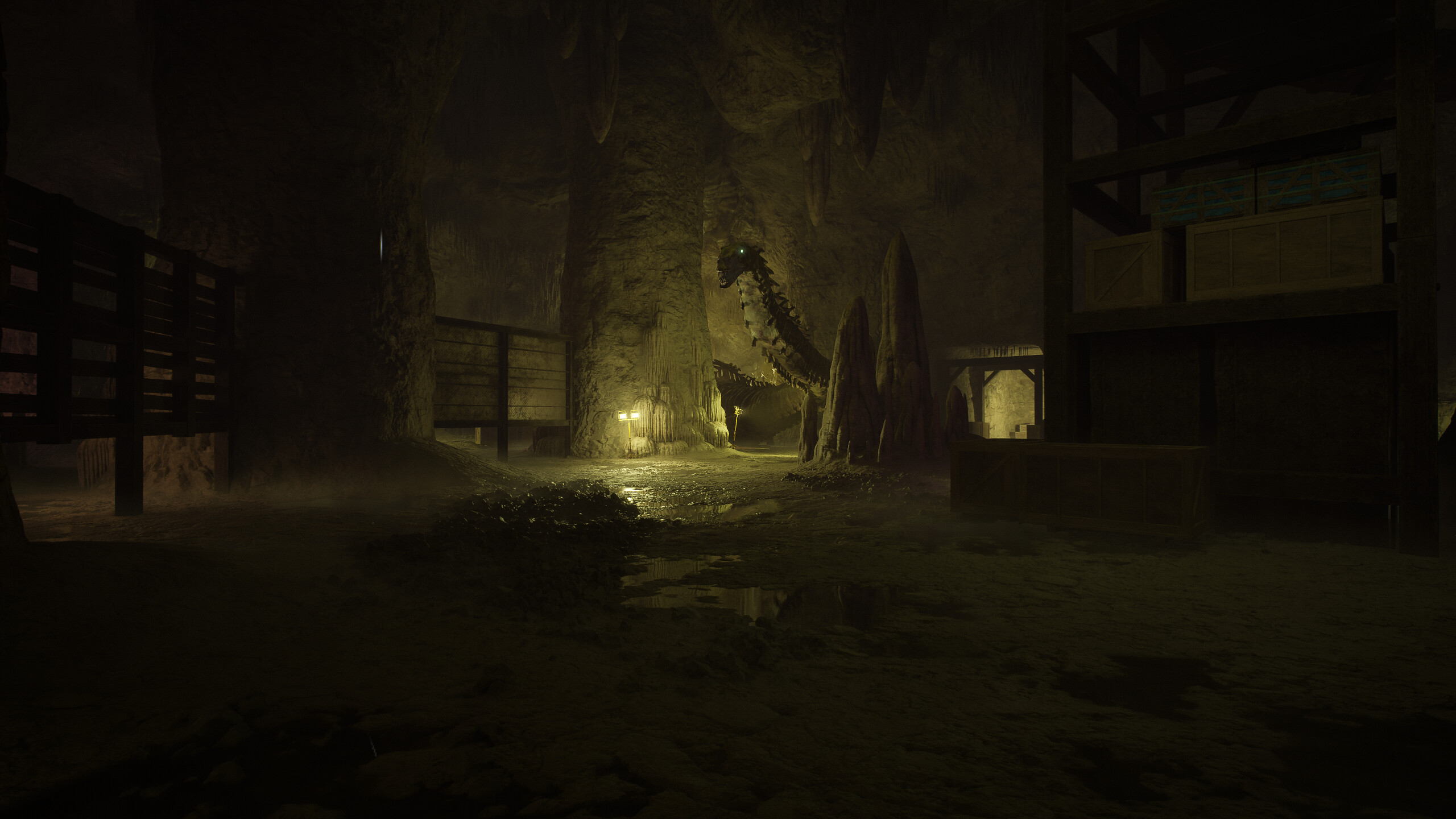
A dinosaur beside the highway usually promises a photo stop, a gift shop or a dubious glimpse of prehistory. Terrible Lizards takes that familiar invitation somewhere less welcoming. WDR Studios' first-person horror platformer sends a college kid into Dalton's Dinos, a Route 66 roadside attraction, after a car breakdown during an early-1990s road trip.
In an October 27 PlayStation Blog feature, studio director and game director John W. Gelardi explains how the team connects that setting with mascot horror and a movement system designed to feel predictable even when the player is running for their life. October 29, 2026 is the scheduled release date; at the time of this article's source check, Steam still described the game as not yet available.
The roadside dinosaur, made unfamiliar
Gelardi says American nostalgia and interstate road trips led the team to the roadside-attraction premise. He points to the oversized dinosaur statues, makeshift prehistoric tours and questionable fossils associated with those stops, placing the game within the dinosaur fascination of the 1990s rather than presenting its creatures as a scientific reconstruction.
He also names indie mascot horror as an influence: familiar imagery can be twisted into something unsettling. Dalton's Dinos gives that approach a specific setting. The attraction's promise of harmless entertainment sits beside the threat waiting below it. For Re:Drawn, that contrast is the useful visual connection: the dinosaur is both an emblem of childhood curiosity and something to escape. This is our reading of the premise, not an additional claim about the team's intentions.
Read John W. Gelardi's design explanation on PlayStation Blog
Fixed speed gives the chase a rhythm
Gelardi describes Terrible Lizards as a 3D first-person platformer, using parkour to describe movement through physical spaces. Its moves include jumping, sliding, wall running, bouncing, grabbing ledges and leaping between them, alongside tools that manipulate the environment.
The key distinction is speed. According to Gelardi, movement is fixed at maximum speed whenever the player can move and jump. Momentum carries forward into a jump, so maintaining movement does not depend on repeatedly building up a run. He describes the result as predictable and rhythmic, with the first-person platforming taking cues from action-shooter movement rather than simply copying other parkour games.
A jump is not the end of your control
Aerial control lets the player correct an overshot jump or steer sideways while airborne, Gelardi explains. That matters alongside the fixed speed: the pace stays consistent, but the player can still adjust a trajectory rather than merely watch a mistake unfold.
Taken together, those details suggest a tension between urgency and precision. The horror supplies a reason to keep moving; the platforming supplies decisions about timing, direction and the next surface. That connection is an editorial interpretation of the mechanics Gelardi describes, not a claim that the game removes danger or guarantees an easy escape.
Release details and credits
The Steam listing identifies WDR Studios LLC as developer and Digital Pajamas and Behaviour Interactive Inc. as publishers. Both primary sources point to October 29, 2026 for release. A scheduled date alone does not establish that a game is already available, so consult the current store listing for its latest status.
Terrible Lizards on Steam: release status and production credits
Comments