
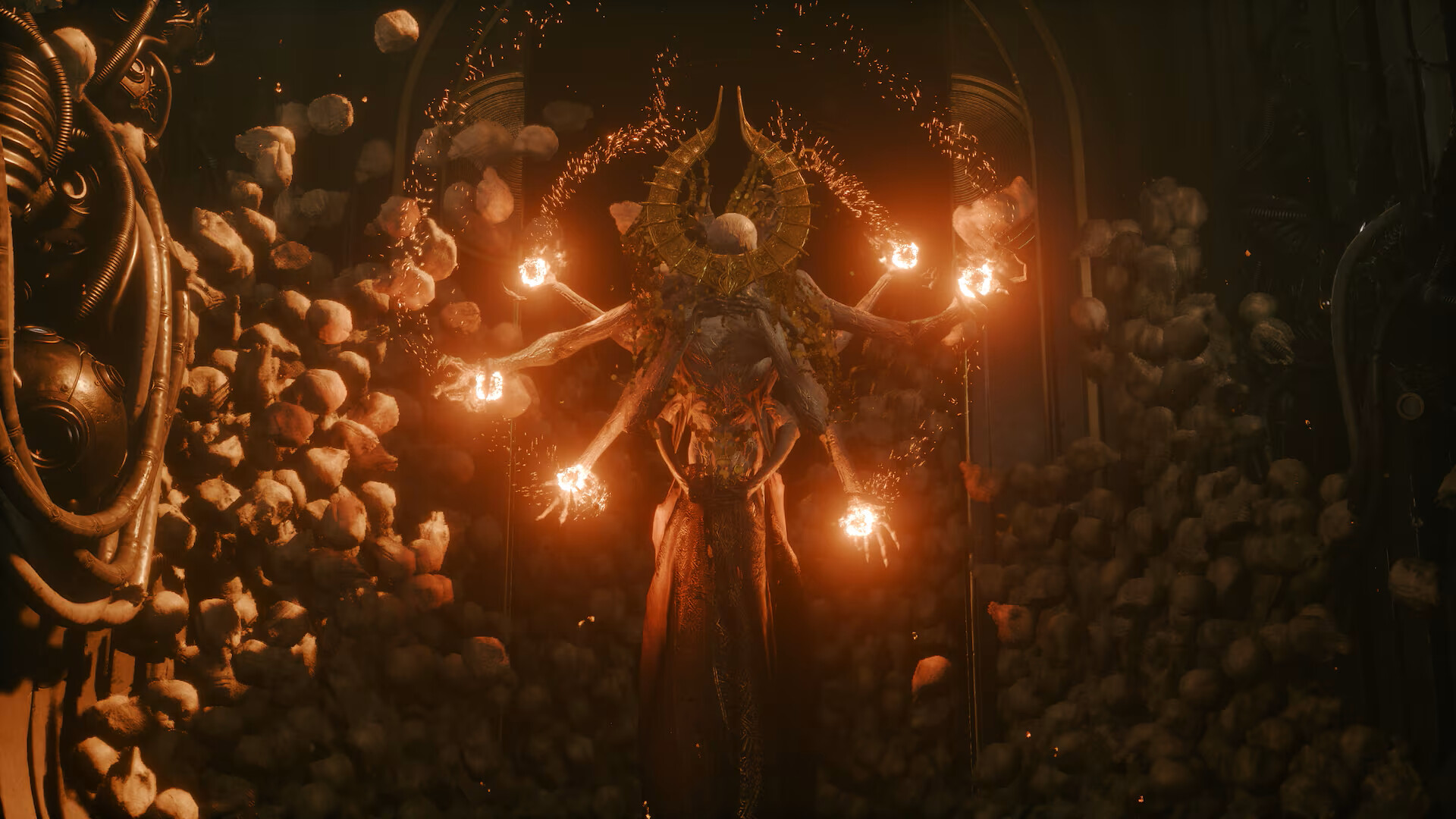
The sound of an eclipse helped give Saros its voice. In an October 27 PlayStation Blog feature, SIE PlayStation Studios senior sound design supervisor Loïc Couthier describes how a didgeridoo recording became a starting point for the Yellow King's vocalisations and the wider sonic palette of Carcosa.
The team's direction from Housemarque was refinement rather than reinvention: retain the gameplay-first feedback and immersive soundscape associated with Returnal while giving Saros its own identity. The result links the planet's cosmic threat to details players can hear and feel in combat.
An instrument becomes a voice
Couthier says the Eclipse was an early creative anchor. During a studio recording session, the team found that processed didgeridoo sounds could take on a deep vocal quality. Further manipulation made those recordings a foundation for the Yellow King's vocalisations and a recurring part of the game's sound palette.
That approach gives a single source room to serve more than one purpose. As Couthier describes it, the sounds connect the Eclipse, the Yellow King and the Corruption. For Re:Drawn, that relationship is a useful example of how an audio motif can make a world feel connected without explaining every link on screen.
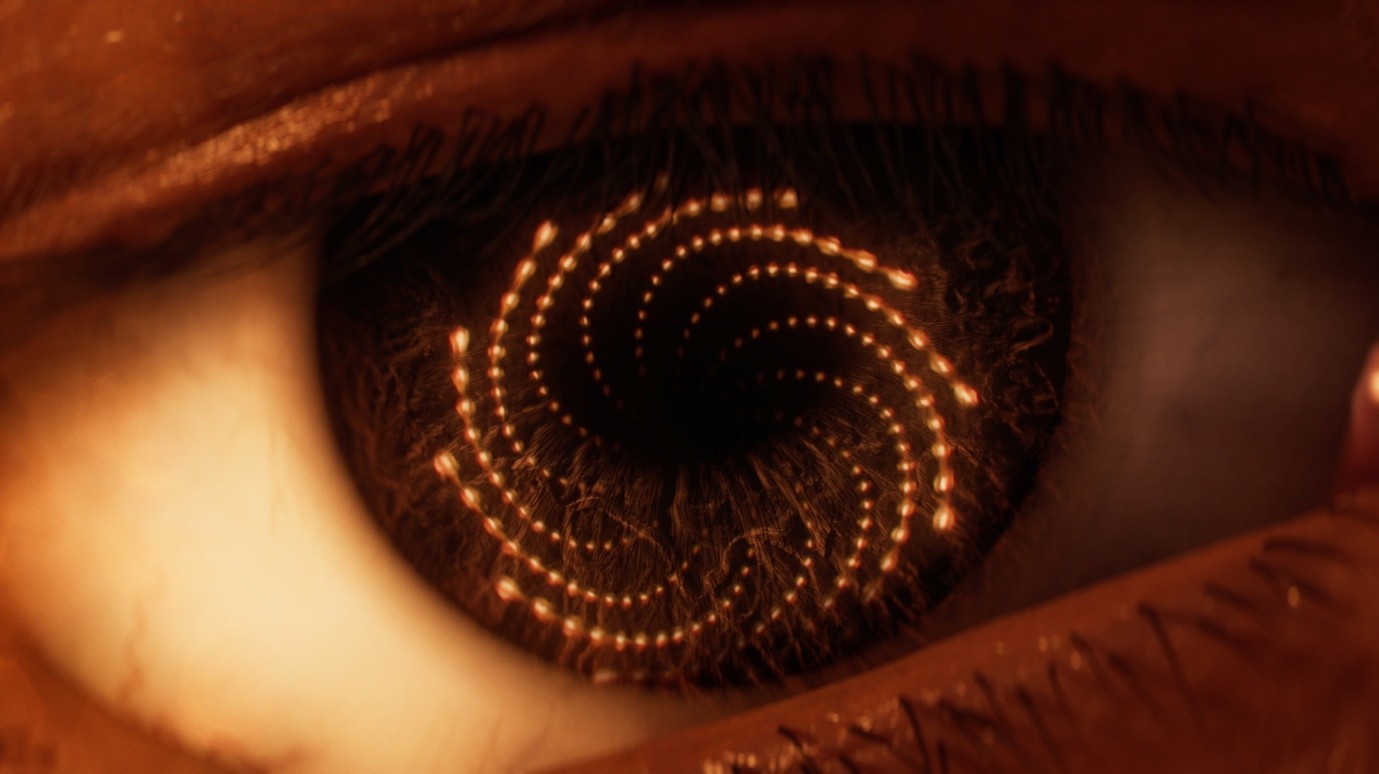
An eye reflecting a spiral of light in an official Saros image accompanying the feature.
Project: Saros
Production: Housemarque / SIE PlayStation Studios
Saros imagery and trademarks belong to Sony Interactive Entertainment and their respective rights holders.
Making enemies readable
The team built distinct sonic families for organic, mechanical and cosmic enemies. Couthier says enemy vocalisations were designed to be fast, tonal and memorable, so players could recognise attacks in time to dodge or use their shield.
For cosmic enemies, the team used Mongolian throat singing as part of the vocal foundation. Higher elements came from singers and instruments including the shakuhachi, balancing menace with a more beautiful quality. The distinction is practical as well as atmospheric: sound can communicate danger even when the screen is crowded.
When sound meets touch
Sound and DualSense haptics were designed together from early development, according to Couthier. One example is a bullet-based weapon: as ammunition runs low, the vibration frequency changes, giving the player feedback without looking away from the action.
The final mix was completed at Abbey Road Studios with the team and Housemarque's creative director. The account offers a view of game audio as both world-building and player communication: a processed instrument gives the setting a recurring identity, while a small tactile change can convey an immediate gameplay state.
Comments