
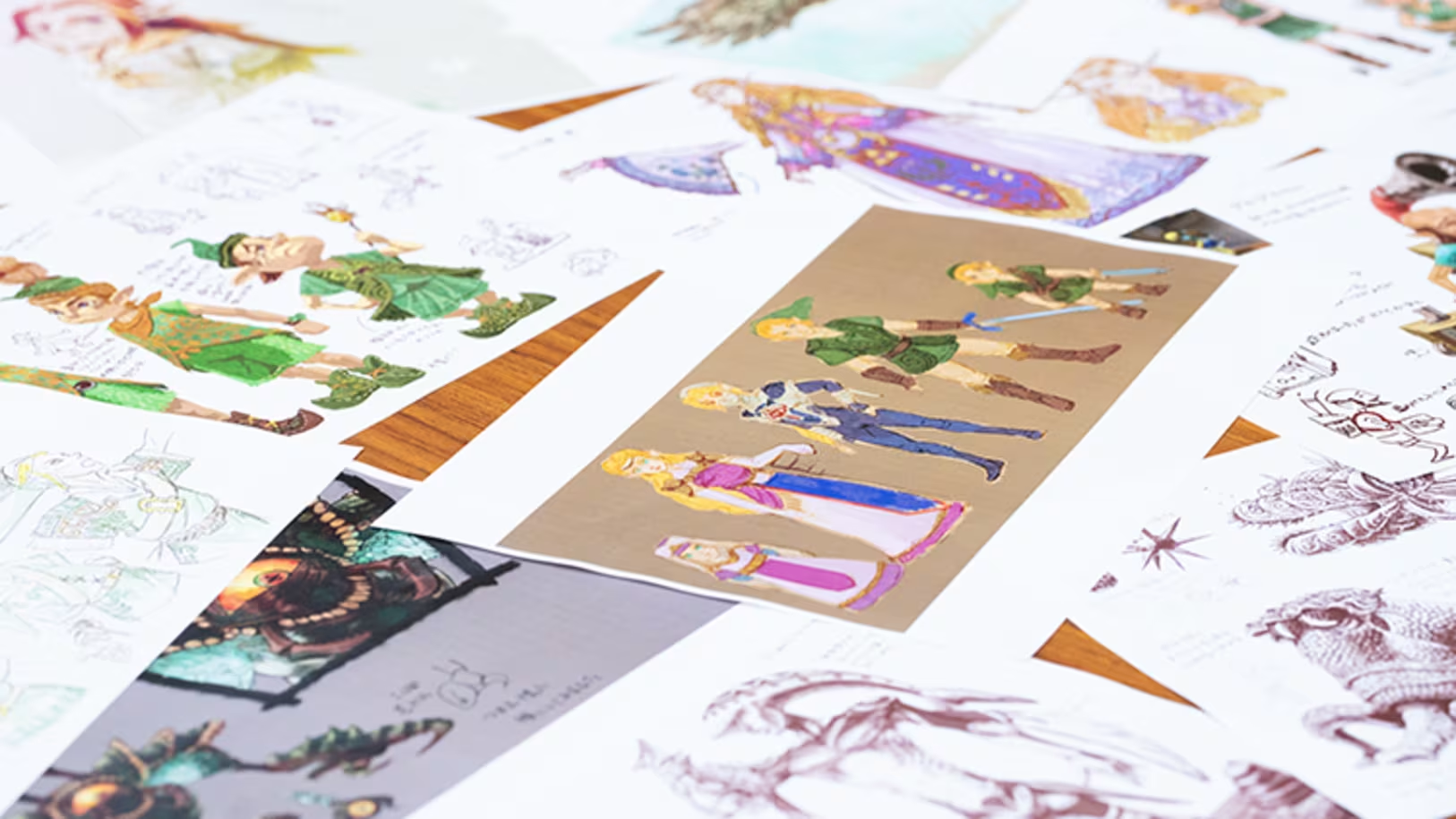
A familiar green tunic raised an unusually practical question for the artists remaking The Legend of Zelda: Ocarina of Time: what fabric could the children of Kokiri Forest actually make themselves?
In Nintendo's November 2 developer interview, art director Aya Shida explained how the team paired tactile references with an interpretation of Hyrule that would feel recognisable to players of the 1998 original. The remake arrived on Nintendo Switch 2 on November 5.
Finding a world for the characters
Shida describes the original Hyrule as beautiful and somewhat dark, with colourful, unusual characters. The challenge was to give that contrast a believable home in a more detailed world while keeping its dreamlike character.
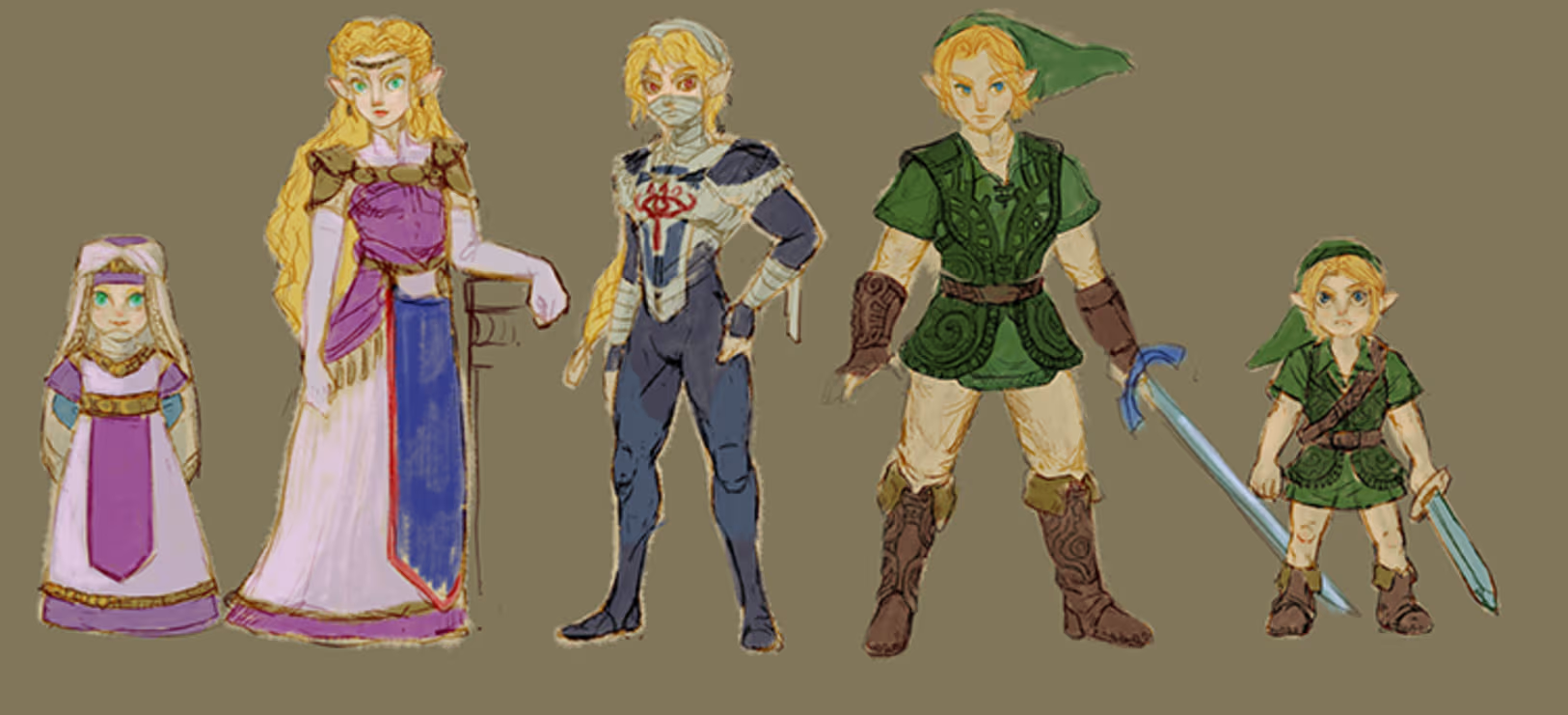
Early character concepts include Zelda, Sheik and Link at different ages. Image: Nintendo.
Project: The Legend of Zelda: Ocarina of Time
Production: Nintendo
Artwork and characters © Nintendo. Separate editorial reuse permission unconfirmed.
Early in development, the team used the feel of puppet theatre and practical-effects films as creative references. Shida says those forms can make fantastical characters feel present without reproducing reality exactly.
Artists began with sketches of Link, Zelda and other characters. In parallel, the team built a 3D Great Deku Tree, adjusting its lighting and textures to show how the characters might fit into their surroundings.
A tunic with a backstory
Young Link's clothes needed to look plausible for children living in the forest. Shida says fabric that looked too neatly machine-woven would not convey that origin. The team examined materials in museums and experimented with making fabric from thread to understand the texture.
That attention extended beyond clothing. Director HokWai Ng says the developers revisited individual characters and their movements, considering who each person was and why they belonged in a particular place.
For Hyrule Field, Shida says the team gave explorable areas more detail than distant inaccessible scenery and enlarged landmarks such as the castle and windmill. Those visual choices help distinguish places to explore from the landscape beyond.
Comments