
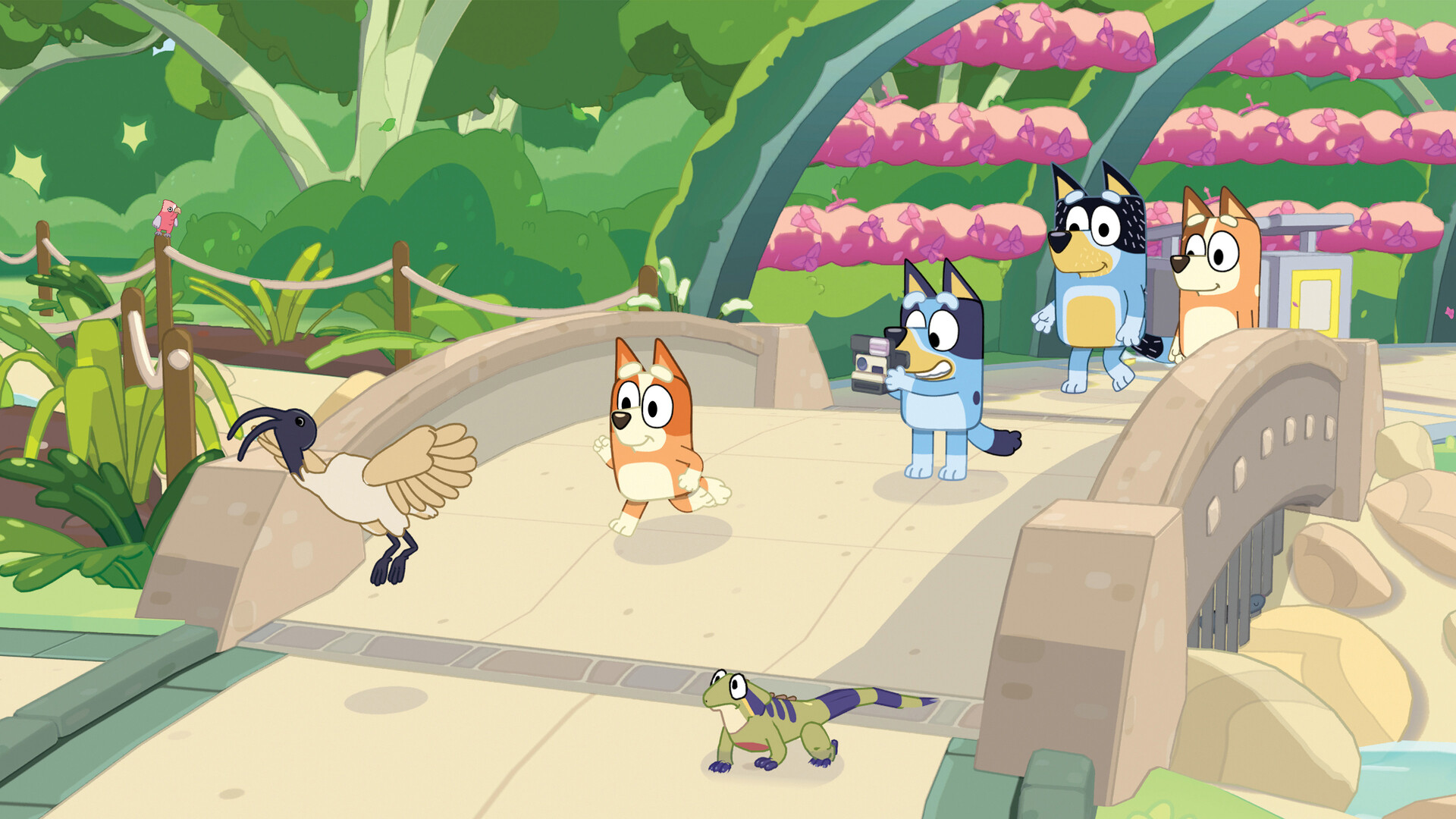
A player can take out a camera and look around Bluey's world, but the characters still need to feel like they belong in the animated series. For Bluey's Happy Snaps, Gameloft Brisbane built a hybrid approach: layered, camera-facing planes for its characters inside environments players can explore.
In an October 23 interview with 80 Level, members of the art and animation team explained the practical decisions behind that appearance. The game launched on October 15, developed with Bluey's producers Ludo Studio and BBC Studios.
Flat shapes with a 3D rig
Technical artist Sean Gobey described modeling characters and skeletons in Maya, then rigging them with Unreal Engine's Control Rig. Lead artist Hannah Crosby said the characters use layered planes with signed distance field textures, which describe shapes in a way that helps preserve clean edges.
Official Bluey's Happy Snaps overview trailer.
Project: Bluey's Happy Snaps
Production: Gameloft Brisbane
Bluey and its characters are trademarks and copyright of Ludo Studio, licensed by BBC Studios. Game imagery belongs to its respective rights holders.
The setup gives artists used to 3D animation a way to work with characters that retain a flat, drawn appearance. Gobey said the team could animate one angle and transfer that work to the other views, with room for adjustments.
Read David Jagneaux's interview with Gameloft Brisbane at 80 Level
The camera changes the problem
Crosby explained that the team needed to account for a player-held camera that could look around in 360 degrees. Character views switch as the camera moves, and the layered planes flatten for the photography view to avoid revealing their construction from acute angles.
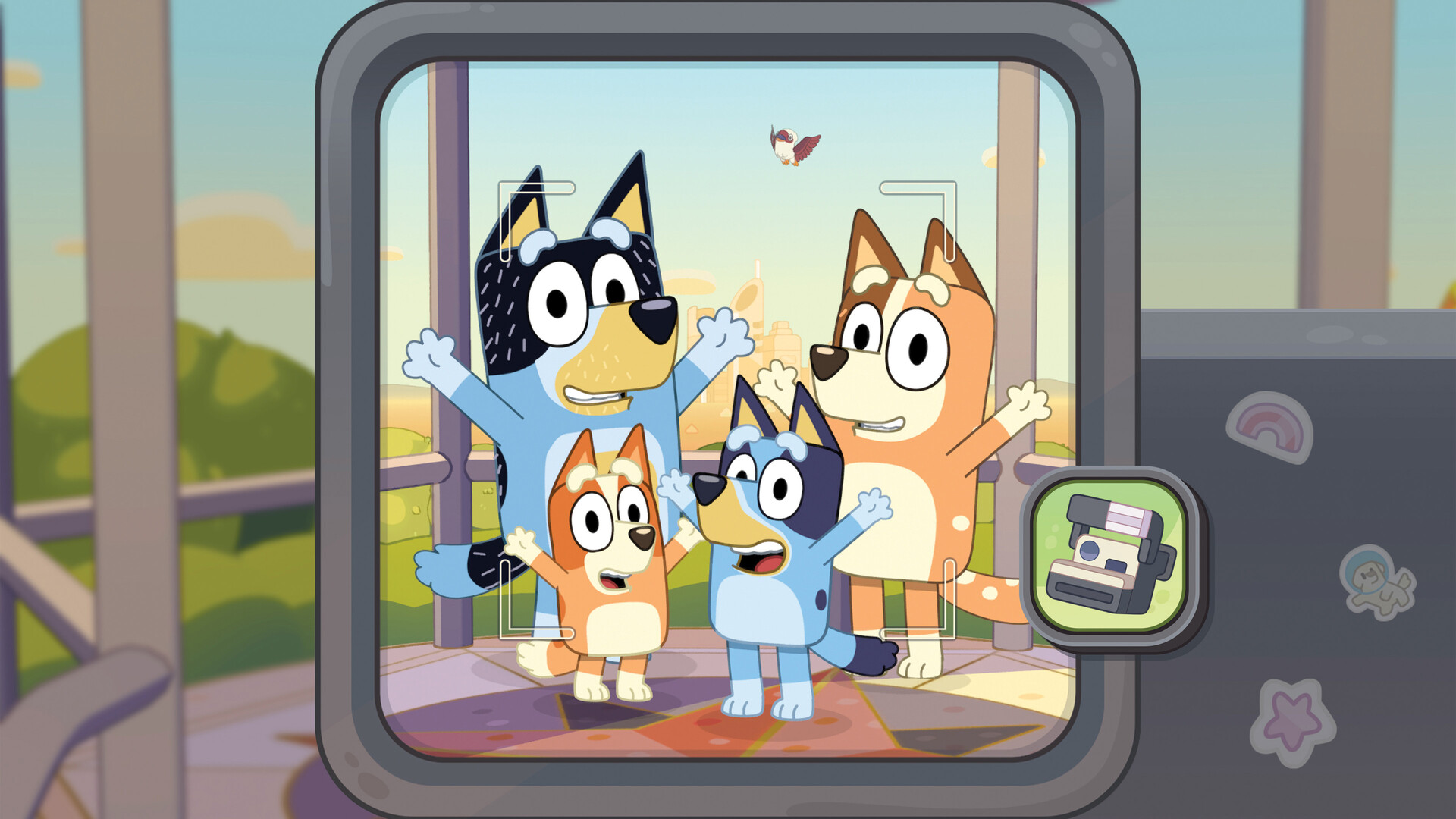
A family portrait framed through the game's camera.
Project: Bluey's Happy Snaps
Production: Gameloft Brisbane
Bluey and its characters are trademarks and copyright of Ludo Studio, licensed by BBC Studios. Game imagery belongs to its respective rights holders.
Associate lead animation artist Dylan Perrett said the team made assets at 45-degree intervals around the characters. The animators could then transfer and refine movement between views, balancing player freedom with the series' familiar shapes.
Drawing light into the world
The team also approached environments differently from characters. Crosby said many textures and details were hand-painted, including selected highlights and shadows, while the team developed an outline treatment for 3D assets.
That combination makes the photography mechanic more than a way to collect images. It also sets a creative requirement: the world has to remain clear and recognizable from the angles players choose. This is Re:Drawn's reading of the production choices described by the team.
Comments