
News
How Marvel Rivals Artists Redesign Iconic Heroes
From familiar silhouettes to painterly 3D models, animation and VFX, the art team explains how Marvel's heroes become unmistakably Rivals.
By Re:Drawn editorial · 2 min read
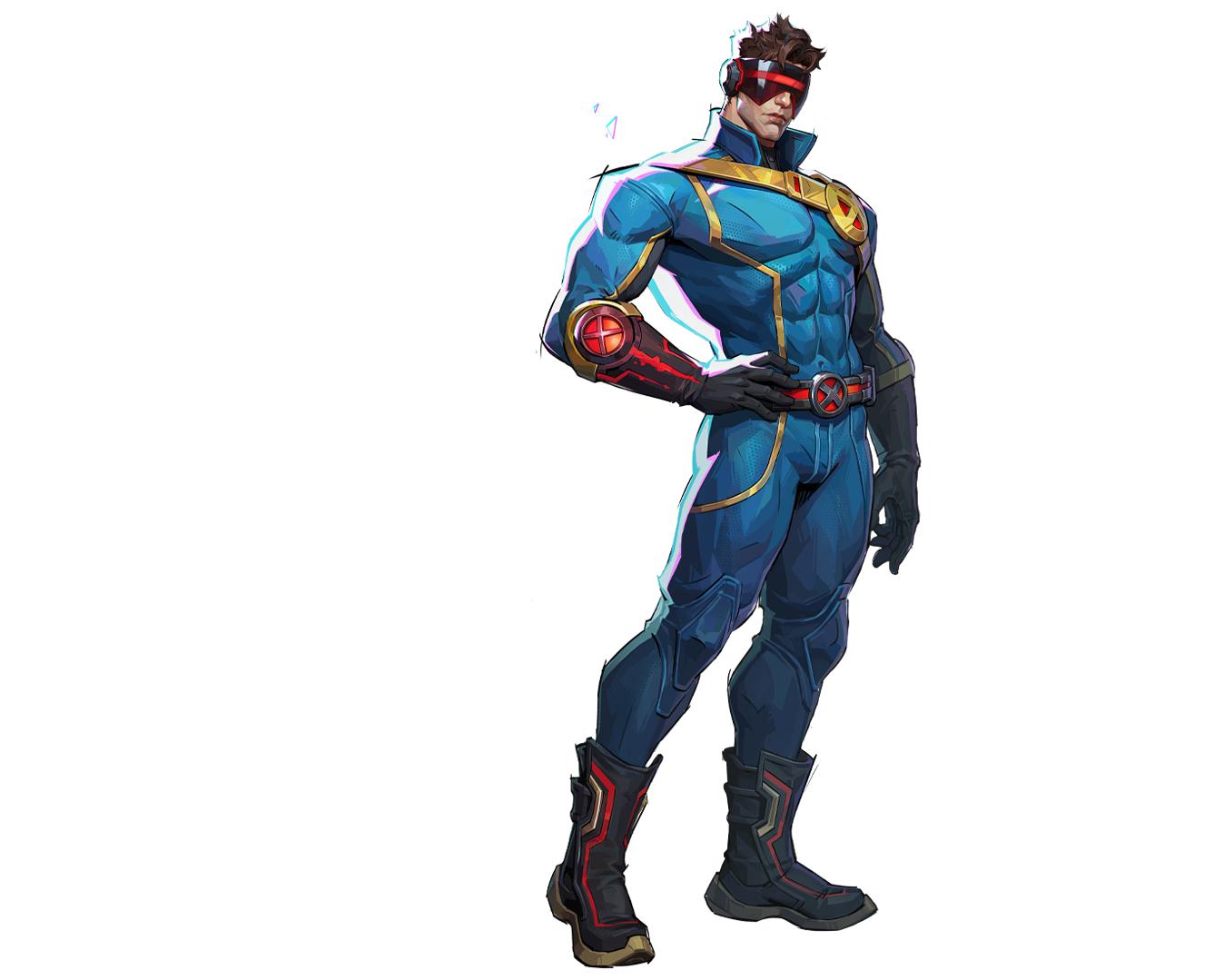
Cyclops keeps his signature visor and blue-and-gold identity in Marvel Rivals.
Project: Marvel Rivals
Production: NetEase Games / Marvel Games
Marvel characters © MARVEL
Redesigning a Marvel hero means making a familiar face feel fresh. In an October 2, 2026 interview with 80 Level, the Marvel Rivals art team explains how recognition carries through concept design, rendering, animation and effects.
Keep the features fans recognise
The team begins with comic history and references across other media. Cyclops retains his visor and gold straps in a streamlined redesign. His eye rig also supports costumes without the visor, while basic movements establish the foundation for ability animations.
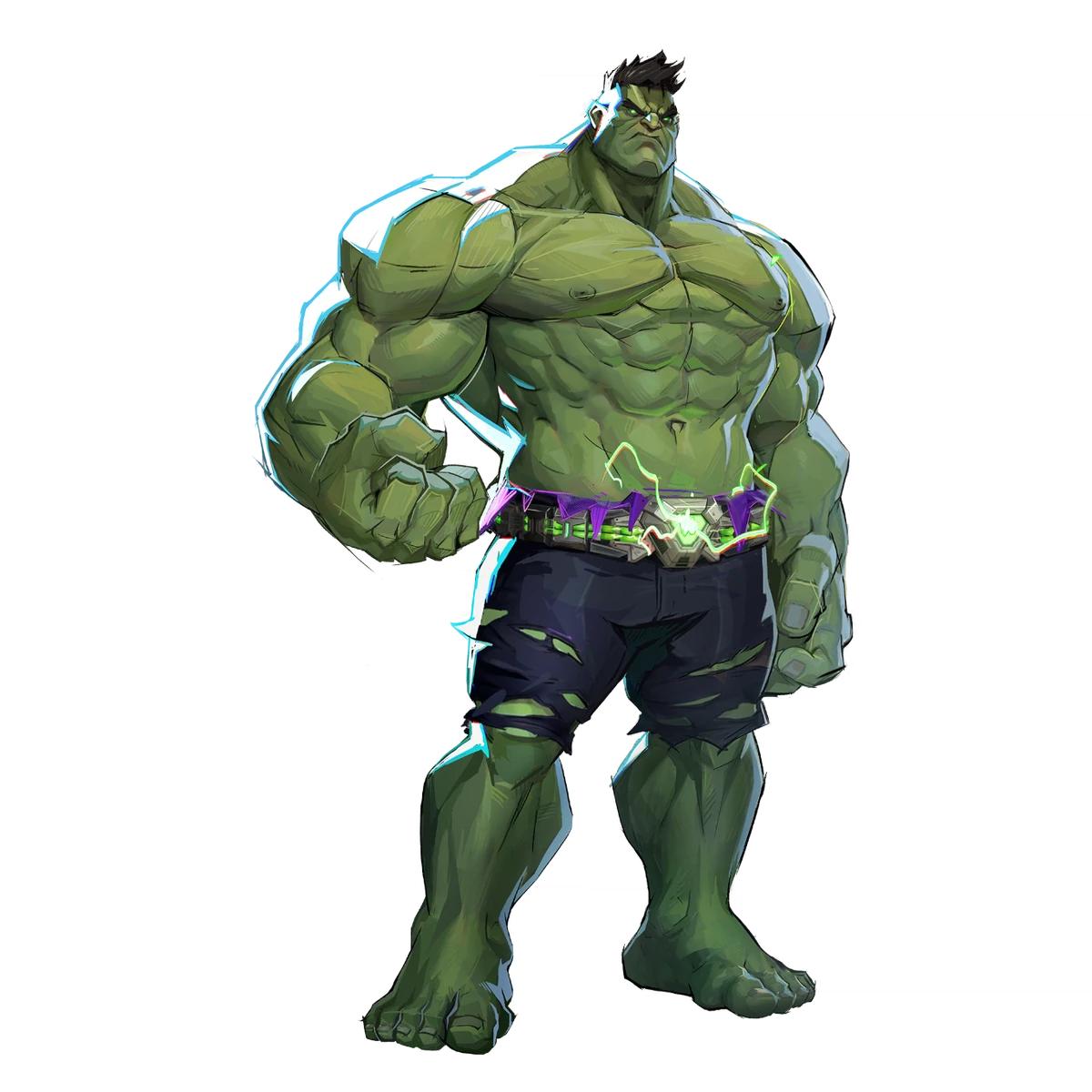
Hulk's broad silhouette and green skin make his identity immediately legible.
Project: Marvel Rivals
Production: NetEase Games / Marvel Games
Marvel characters © MARVEL
Build in 3D, think in 2D
Art director Dino Ma described the guiding principle in a June 2025 Creative Bloq interview: preserve the expression of the original 2D artwork throughout 3D production. Anime, animated films and graphic packaging helped shape the game's bold colour and exaggerated forms.
Materials combine stylised textures with physically based and non-photorealistic rendering. Rather than letting realistic lighting dictate the result, the team adapts the rendering pipeline to protect the illustrated aesthetic. Ma also points to anime-inspired movement and speed lines in ability design.
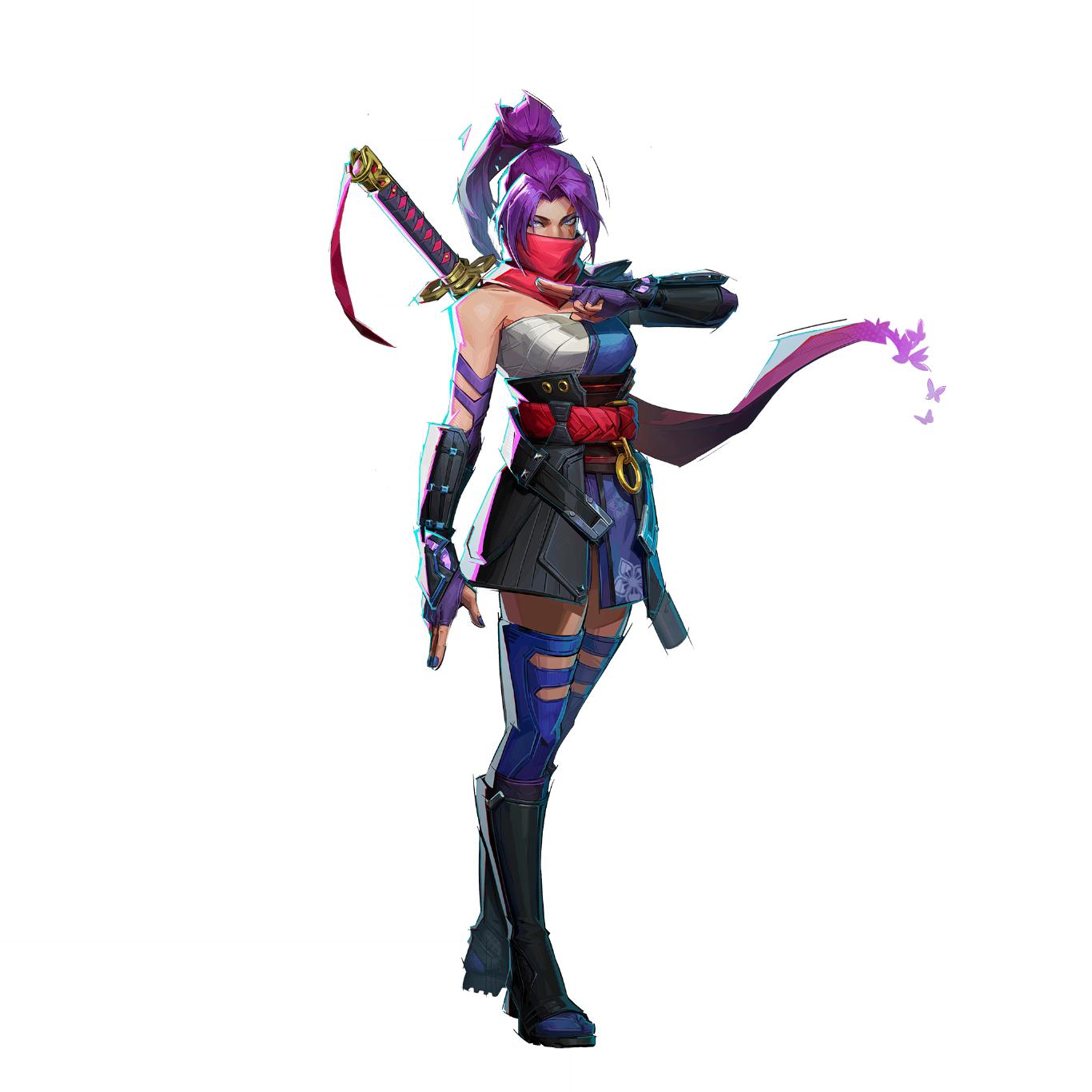
Psylocke's contrasting colour blocks and sharp costume shapes show the game's illustrated aesthetic.
Project: Marvel Rivals
Production: NetEase Games / Marvel Games
Marvel characters © MARVEL
Shaders keep the comic look readable
The 80 Level interview details a custom NPR/PBR character shader with controllable shadow colours and highlight shapes. Local lighting and exposure adjustments help preserve outlines and volume against environments.
In the character artwork, the effect is clear: surfaces have depth, yet the broad shapes still read like illustration. The rendering supports the design's personality.
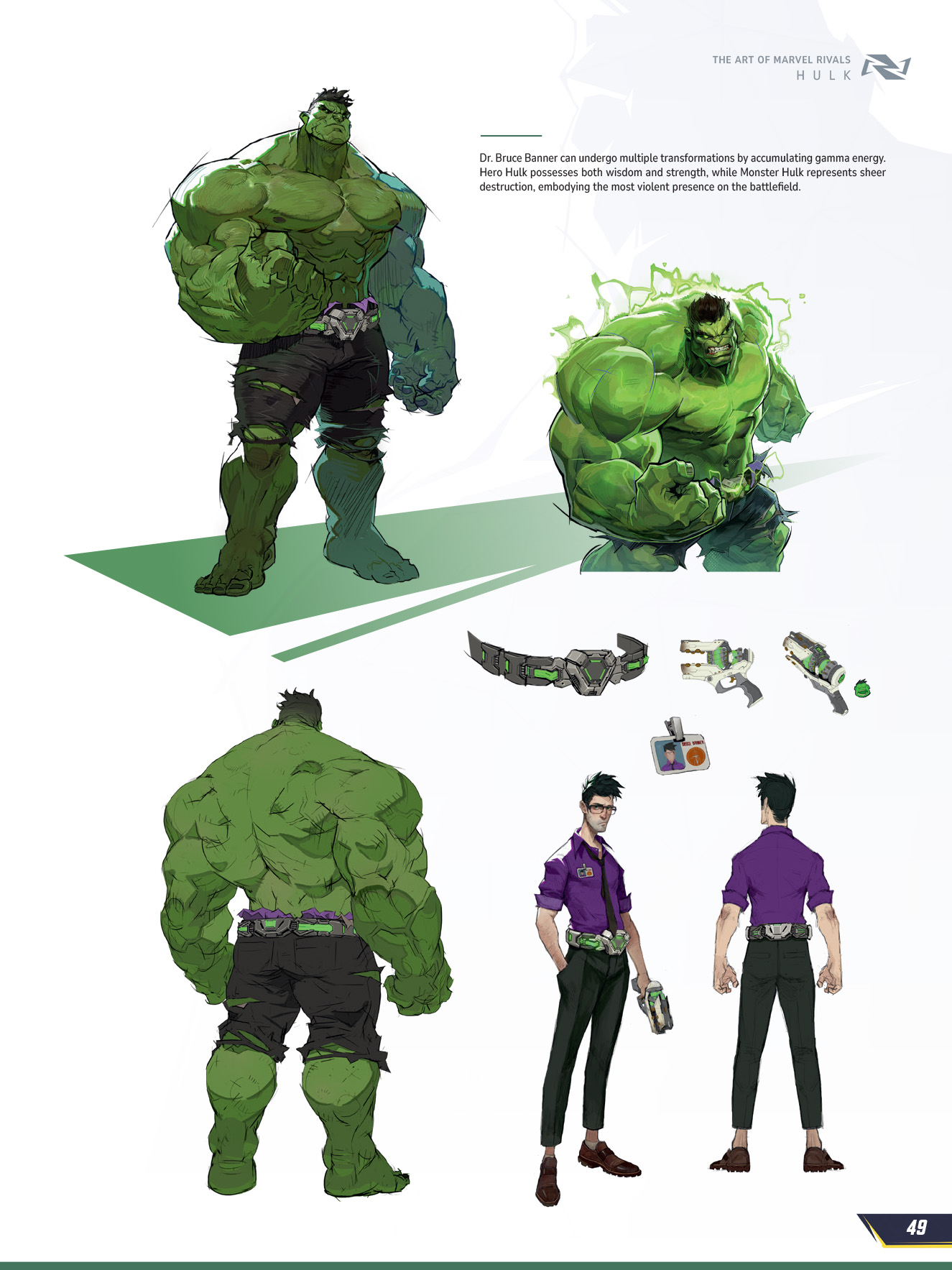
Hulk design page from The Art of Marvel Rivals. Art and captions: NetEase Games; publisher: Dark Horse Books.
Project: Marvel Rivals
Production: NetEase Games / Marvel Games
Marvel characters © MARVEL
Give every power its own visual rhythm
Cyclops' effects distinguish attacks by intensity and shape: a restrained primary beam, a broader mobility effect and an ultimate with debris and Kirby Crackle particles. The team describes VFX as part of character identity, with combat clarity guiding the spectacle.
For Re:Drawn, the interesting connection is how many people contribute to that instant recognition. Costume shapes, surface treatment, movement and effects all have to tell the same character story.
Look closer at the artwork
The Art of Marvel Rivals brings together character and environment artwork with developer commentary. Published by Dark Horse Books in September 2025, the 208-page collection offers another view of the designs behind the game.
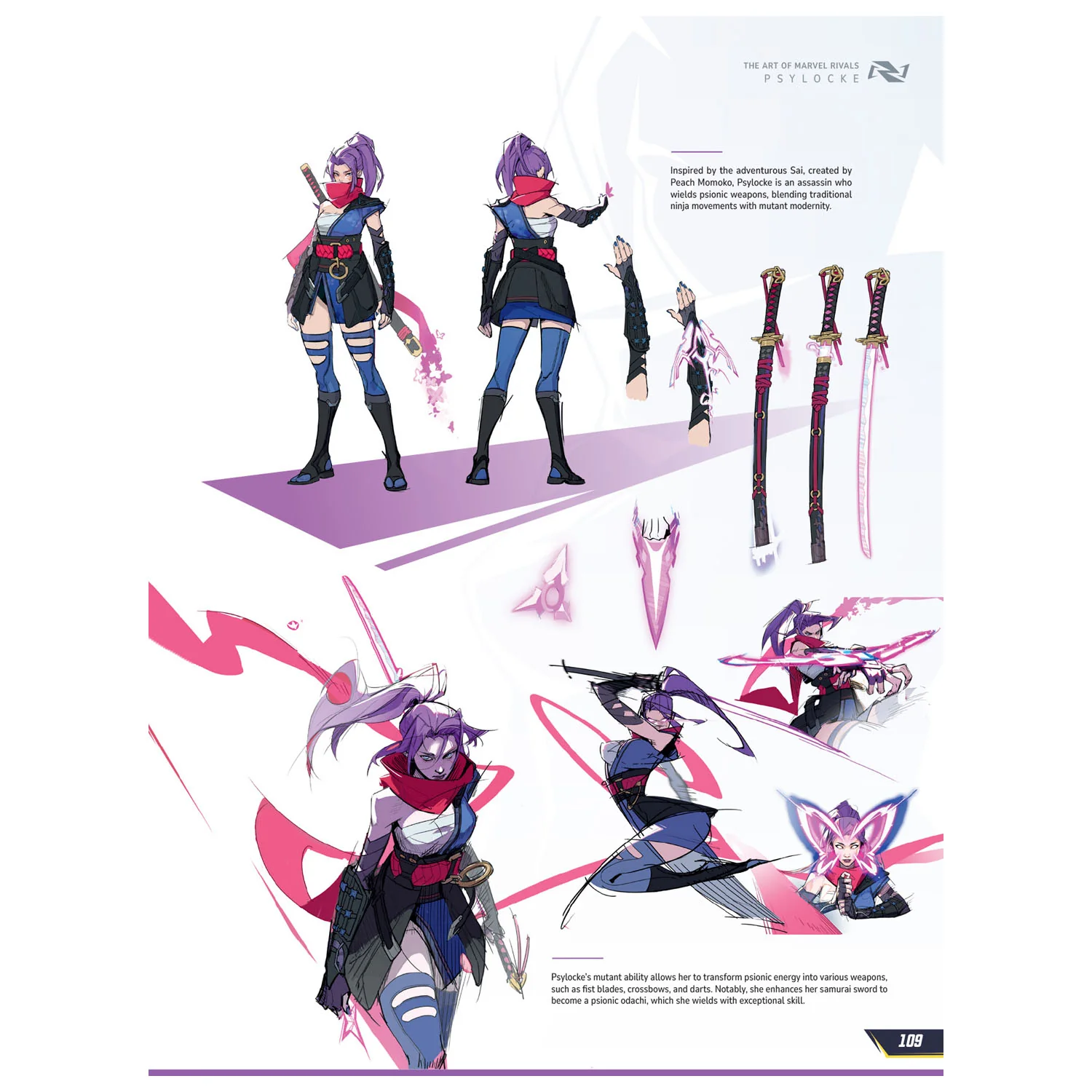
Psylocke design sheet from The Art of Marvel Rivals. Art and captions: NetEase Games; publisher: Dark Horse Books.
Project: Marvel Rivals
Production: NetEase Games / Marvel Games
Marvel characters © MARVEL
Sources.
80 Level: Marvel Rivals Art Team interview, conducted by David Jagneaux (October 2, 2026)
Creative Bloq: Alan Wen interviews art director Dino Ma (June 12, 2025)
The Art of Marvel Rivals: NetEase Games, Dark Horse Books (September 2, 2025)